Vibe Nights Are the New Friend Dates: How Themed Hangouts Are Changing the Way We Connect

Photo: Olusegundare, CC BY-SA 4.0, via Wikimedia Commons
Somewhere between the third scroll through your group chat and the fourteenth "idk, what do YOU want to do?" you've probably felt it — that low-grade social fatigue that comes from hanging out without any real intention behind it. You showed up, you sat on someone's couch, you half-watched a show nobody picked. And by Sunday morning, you couldn't quite remember what you even talked about.
Enter the Vibe Night.
It's not a party. It's not a dinner party, exactly. It's something in between — a recurring, intentionally themed hangout that your friend group rotates through on a schedule, where someone's in charge of the aesthetic, the music, the food, and the general feel of the evening. And if it sounds extra, that's kind of the whole point.
Why Ordinary Hangouts Stop Feeling Special (And What to Do About It)
Psychologists have long studied the concept of rituals — structured, repeatable behaviors that carry symbolic meaning — and their findings are pretty compelling. Rituals, even small ones, create a sense of anticipation and shared identity. They signal to your brain: this moment matters. A themed night functions the same way. The moment someone sends "it's my turn to host — this Friday is 70s Disco Night, dress code is flares or glitter," something shifts. Suddenly the weekend has a shape.
Research from Harvard Business School suggests that shared rituals increase enjoyment and emotional connection among groups, even when the ritual itself is relatively simple. The intentionality is the ingredient. You're not just hanging out — you're building a shared memory with a clear aesthetic frame around it.
For friend groups navigating busy adult schedules, scattered across different neighborhoods, maybe even different time zones on the digital side — that frame is everything.
The Anatomy of a Great Vibe Night
A good themed night doesn't require a massive budget or Pinterest-level execution. It needs three things: a clear concept, a sensory anchor, and a host who commits.
The concept can be as simple as "Italian grandmother's kitchen" (red checkered tablecloths, Dean Martin on Spotify, pasta from scratch or honestly just Trader Joe's) or as specific as "1996 blockbuster video store" (VHS covers taped to the wall, popcorn in red-striped bags, a bracket-style movie vote). What matters is that it's specific enough to feel like a world you've stepped into.
The sensory anchor — usually a playlist — is what makes the vibe stick. Music is the fastest way to transport a room. A 70s soul playlist hits different when the lights are low and someone actually showed up in a wrap dress. The right songs make the theme feel lived-in rather than costume-y.
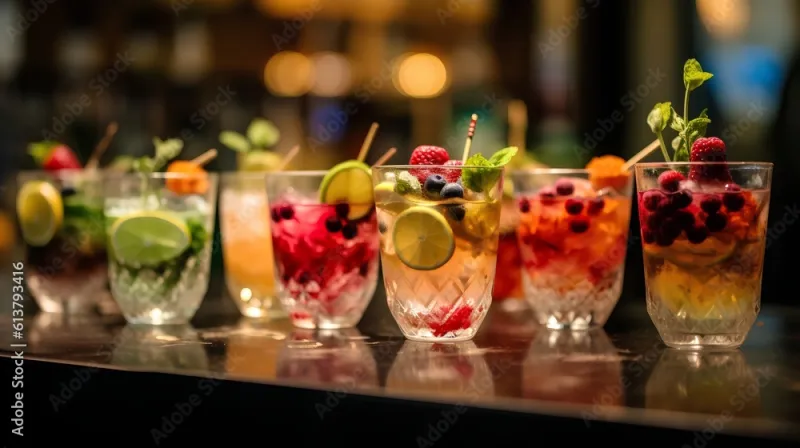
And the host? They set the tone. Not by stressing over every detail, but by committing to the bit. If you're doing a "summer in Oaxaca" night, you're making mezcal cocktails (or agua fresca for the non-drinkers), you're putting on cumbia, and you're not apologizing for the paper streamers.
Building Your Rotation: Six Concepts to Get You Started
The real magic of Vibe Nights is the rotation — each person in the group takes a turn hosting, which means every few weeks there's a new world to show up to. Here are six concepts that work beautifully in a US context:
1. Studio 54 Redux Think velvet, mirror balls (they're like $12 on Amazon), and a Donna Summer-to-Chic playlist. Dress code: anything that catches light. Signature drink: Harvey Wallbangers, or a sparkling passionfruit mocktail for the non-drinkers.
2. Night Market Night Pull inspo from Southeast Asian night markets — think small plates, string lights, and a mix of Thai, Vietnamese, and Filipino street food. Everyone brings one dish. Spotify playlist: "Asian Night Market Vibes" is genuinely a thing that exists and it slaps.
3. Retro Game Parlor Dig out the N64, set up a card table for Spades or Uno Attack, and make it competitive. Snacks are exclusively things from vending machines or gas stations. Playlist: lo-fi beats or a video game soundtrack compilation. The chaos is the aesthetic.
4. Cottagecore Supper Club Flowers on the table, candles everywhere, a slow playlist of Phoebe Bridgers and Joni Mitchell. Everyone brings a dish they actually cooked. The vibe is "dinner party at a cabin in Vermont that doesn't exist but should."
5. Decade Dive Pick a specific year — say, 2003 — and curate everything around it. The music (early 2000s pop-punk), the snacks (Dunkaroos, obviously), the conversation starter ("what were you doing in 2003?"). Nostalgia is a powerful social glue.
6. Global Film Night Pick a country, find a celebrated film from there (Parasite, Roma, Portrait of a Lady on Fire), cook food from that cuisine, and make it a full sensory experience. It's a little cultured, a little cozy, and it genuinely sparks better conversation than another Marvel rewatch.
The Community Science Behind Why This Works
There's a reason certain friend groups feel tighter than others — and it's rarely about how long you've known each other. It's about density of shared experience. Vibe Nights are an efficient way to manufacture those experiences. When you've done the Night Market Night and the Retro Game Parlor and the Cottagecore Supper Club, you have a whole internal language with your people. Inside jokes, recurring bits, callbacks. "Remember when Jake showed up to Studio 54 night in literal cargo shorts?" That's the stuff friendships are made of.
Sociologists call this communal memory building — the process by which groups form cohesive identities through accumulated shared events. You don't need a sorority or a sports team to do this. You need a group chat and someone willing to commit to the bit.
Getting Your Group On Board
The hardest part isn't the decor — it's convincing your notoriously low-energy friend group to try something new. Start small. Host the first one yourself, keep the theme accessible ("90s movie night" requires zero effort to understand), and let the vibe speak for itself. By the end of the night, someone will already be volunteering to host the next one.
Set a loose cadence — once a month is sustainable for most groups — and create a simple rotation so no one person is always doing the heavy lifting. A shared notes doc or a group calendar event works fine. The infrastructure doesn't need to be fancy.
What it needs to be is consistent. Because the ritual is the point. Not the perfect playlist or the flawless decor — the fact that you keep showing up, keep building the world together, keep making ordinary Fridays feel like something worth remembering.
That's the vibe. And once you find it, you won't want to go back to the couch-scroll-nothing nights.