Set the Table, Set the Tone: Why Dinner Parties Are the Ultimate Power Move Right Now
Something is happening in American living rooms and dining rooms that nobody fully predicted: people are pulling out the good plates, planning multi-course menus, and treating a Saturday night at home like an event worth dressing up for. The dinner party is back, and this time it's not your parents' stuffy affair — it's a full-on cultural statement.
For a generation that grew up splitting Postmates orders in sweatpants, choosing to host — like, really host, with a curated guest list and a hand-written menu card — feels almost radical. And maybe that's exactly the point.
From Casual to Intentional: What Shifted
For most of the 2010s, casual dining culture ruled everything. The vibe was always low-key: group chats, last-minute plans, whoever can make it shows up. Spontaneity was the whole personality. Reservations felt too formal. Cooking for people felt like a lot.
But something started to crack. Maybe it was the pandemic forcing everyone to rethink what gathering actually meant. Maybe it was the slow creep of screen fatigue making people crave experiences that felt deliberate. Whatever the trigger, a noticeable shift happened — and now, across major cities like New York, LA, Chicago, and Austin, a growing crowd of millennials and Gen Zers are leaning hard into the dinner party as a social format.
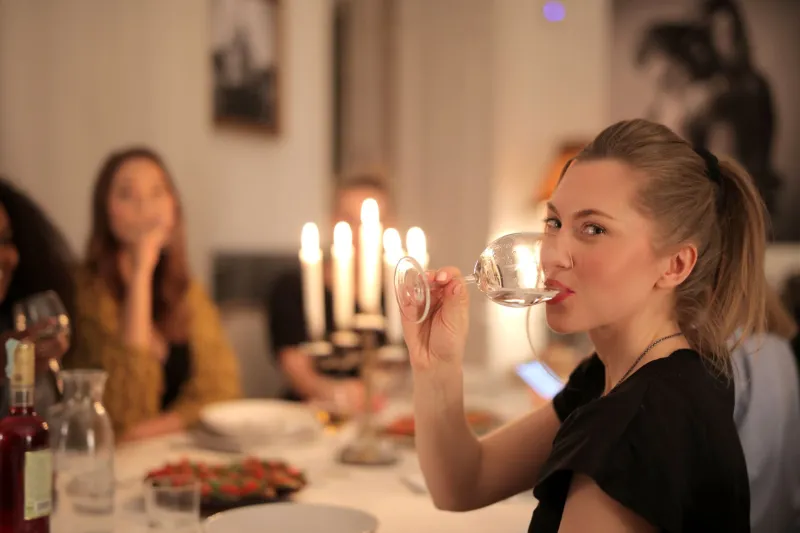
Not a hangout. Not a vibe sesh. A dinner party. With courses. With candles. With a reason to show up on time.
The Psychology of Putting in the Work
Here's the thing about hosting a dinner party that makes it different from almost any other social event: it costs you something. Time, energy, money, planning. You have to think about dietary restrictions, wine pairings, whether your apartment can actually fit eight people around a table. That effort is the whole point.
Psychologists have long noted what's sometimes called the "IKEA effect" — we assign more value to things we've put labor into. Apply that to social experiences, and it starts to make sense. A dinner party you've spent two days planning feels more meaningful than a bar night you texted about twenty minutes before. The investment signals something: you matter enough for me to do this.
That's a powerful message in a culture where ghosting is common and plans fall apart constantly. Showing up to someone's home for a multi-course meal is a mutual commitment. It's showing your cards. And people are hungry for exactly that kind of intentionality.
The New Flex Isn't a Reservation — It's Your Table
For a long time, status in going-out culture was tied to access. Getting into the right restaurant, scoring a rooftop table, knowing the bouncer. The flex was external — about what you could get into.
The dinner party flips that script entirely. The flex is now what you can create. Your playlist, your centerpiece, your braised short ribs recipe you've been perfecting since last winter. Hosting well has become its own form of social currency, and it reads differently than just having money to spend. It reads as taste, care, and personality — which are harder to fake.
Scroll through any corner of food-adjacent social media and you'll see it: beautifully set tables, mismatched vintage glassware, handwritten place cards, charcuterie that's been arranged with genuine artistry. These aren't restaurant photos. They're someone's dining room. And they're getting the engagement that used to go to Michelin-starred spots.
The Guest List Is the Whole Game
One underrated element of the dinner party revival? The curation of who's there.
A good dinner party isn't just about the food — it's about the chemistry of the room. Hosts are thinking carefully about who to seat next to whom, which personalities will spark interesting conversations, and how to mix friend groups without creating awkwardness. That kind of social architecture is genuinely skilled work, and people are starting to respect it as such.
There's also something quietly countercultural about the intimacy of it. In a world where your social media following can number in the thousands, choosing to share a meal with eight specific people is almost an act of defiance. It says: not everyone gets this version of me. That exclusivity — earned through actual relationship, not algorithmic reach — feels rare and valuable.
Ritual in a World That Forgot How to Slow Down
Dinner parties are, at their core, rituals. And rituals do something for us that casual hangouts don't quite manage: they mark time. They say this moment is worth acknowledging.
In a culture that moves at scroll speed, where evenings blur together and weekends vanish without much to show for them, a dinner party creates a memory with edges. You remember the specific conversation. The dish that didn't quite work but everyone ate anyway. The friend who stayed until 1am and ended up telling you something real.
That's not an accident. It's what happens when you build a container for connection — when you set the table, dim the lights, and tell everyone to put their phones away for a few hours.
How to Actually Do It Without Losing Your Mind
If the dinner party sounds appealing but also mildly terrifying, here's the honest truth: it doesn't have to be perfect to be good. Start smaller than you think. Four people is a dinner party. One impressive dish with simple sides is a dinner party. A clean table and a good candle is a dinner party.
The ritual is what matters, not the execution. Pick a date far enough in advance that people can actually plan for it. Send a real invitation — even just a thoughtful text. Make one thing from scratch. Set the table before anyone arrives. That's it. That's the whole formula.
The bar for a meaningful gathering isn't as high as our anxiety makes it feel. People are so starved for intentional connection right now that showing up with genuine effort — any genuine effort — lands differently than you'd expect.
The Bigger Picture
The dinner party revival isn't just a food trend or an aesthetic moment. It's a response to something real: a collective exhaustion with the transactional, the digital, the low-effort version of togetherness that's become the default.
When you host a dinner party, you're making a statement about what you think social life is for. Not just to fill time, not just to be seen somewhere, but to actually sit down with people you chose and eat something that took effort and talk about things that matter — or things that are completely ridiculous, because that counts too.
That's a vibe worth reviving. Set the table.