Two Hours, Full Send: How the Micro-Hangout Became America's Favorite Social Move
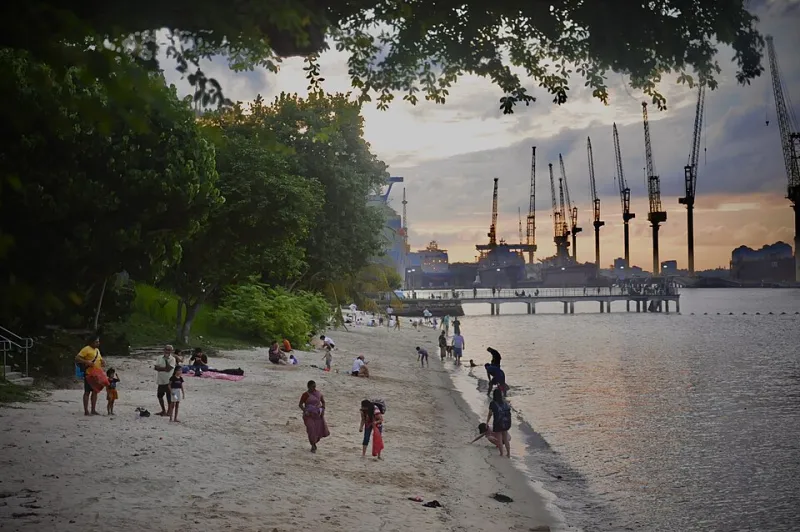
Photo: Damientan14, CC BY-SA 4.0, via Wikimedia Commons
Remember when a good night out meant you didn't get home until 2am? When making plans implied a full evening commitment, a significant chunk of your next day written off, and a vague sense of obligation to stay until the energy died? Yeah. That era is quietly exiting the chat.
What's replacing it is faster, sharper, and — according to a growing number of social researchers, hospitality insiders, and people who actually have jobs and lives — significantly more satisfying. Welcome to the age of the micro-adventure.
What Even Is a Micro-Adventure?
The term sounds like something a wellness influencer invented, but the concept is dead simple: a highly intentional, time-bounded social experience that delivers maximum vibe in minimum hours. We're talking two hours, give or take. A sunset picnic at the park with a curated playlist and good cheese. A late-night museum tour. A themed pop-up dinner that starts at 7 and wraps before 9. A rooftop stargazing session followed by one round of drinks at a spot you've been meaning to try.
The defining feature isn't the activity — it's the intentionality. Micro-adventures are planned with purpose. They have a clear start, a clear end, and a specific vibe that everyone's signed up for. No drifting from bar to bar hoping the night figures itself out. No one checking their watch at midnight wondering when it's socially acceptable to leave. The parameters are built in.
Why Now? The Bandwidth Problem Is Real
American social life has been quietly fragmenting for years. Between remote work blurring the line between home and office, side hustles eating into evenings, and the general cognitive load of just existing in 2025, people are reporting that their social bandwidth — the mental and physical energy available for connection — is genuinely limited.
A 2023 survey from the American Psychological Association found that time pressure is one of the top reasons Americans report seeing friends less than they'd like. It's not that people don't want to connect. It's that the traditional formats for connecting — the long dinner, the all-night bar crawl, the weekend trip that requires a week of planning — feel like they require more than people can reliably give.
Micro-adventures solve the bandwidth problem without sacrificing the experience. You're not canceling your social life. You're compressing it into something that actually fits.
The Science of Why Short Can Hit Harder
Here's the counterintuitive part: research suggests that shorter, more focused social experiences can actually generate deeper feelings of connection than longer, more diffuse ones.
Psychologists studying what they call peak-end theory — a concept developed by Nobel laureate Daniel Kahneman — found that people evaluate experiences based on how they felt at the most intense moment and how they ended, not how long they lasted. A two-hour experience with a strong peak moment and a satisfying close can feel more meaningful than a five-hour night that just kind of... fizzled.
Micro-adventures are essentially peak-end theory in practice. Because the window is short, organizers (and participants) are more likely to curate for quality. Every element has to earn its place. The result is a more memorable experience, even if the clock says it was brief.
What It Looks Like in the Wild
Across major US cities, the micro-adventure format is already reshaping how entertainment and hospitality businesses operate.
In New York, "golden hour" pop-up gatherings — think 90-minute rooftop sessions timed to sunset, complete with pre-set playlists and optional picnic kits — have been selling out on Eventbrite faster than traditional nightlife events. In LA, late-night museum experiences like the Getty's occasional after-hours events or the Museum of Ice Cream's limited-time evening slots draw crowds who specifically want a contained, aesthetically rich experience without the club commitment.
Restaurant groups in Chicago and Austin are experimenting with "micro-tasting" formats — intimate, themed dinners capped at under two hours by design, with prix-fixe menus that move fast and encourage conversation. The feedback, according to operators, has been overwhelmingly positive. Guests feel energized when they leave, not depleted.
And then there's the pop-up economy more broadly: themed picnic companies, mobile cocktail experiences, escape rooms, and sound bath events have all exploded in part because they offer exactly what the micro-adventure promises — a complete, contained experience that respects your time.
It's Actually Making Friendships Stronger
Skeptics might argue that less time means less depth. But the data — and a lot of anecdotal evidence from people who've made the switch — suggests the opposite.
When you know you only have two hours, you don't waste them. Small talk gets shorter. People get to the good stuff faster. The shared focus of a specific activity (watching the sunset, navigating an escape room, tasting through a cheese board) creates what social psychologists call parallel engagement — a state where people bond not just through conversation but through a shared sensory experience. It's the same reason concerts and sports games generate such strong social memories. You're doing something together, not just being in the same space.
Friendship researchers at the University of Kansas have noted that it's not total hours spent together that builds closeness — it's the intensity and intentionality of that time. Micro-adventures score high on both.
How to Build Your Own
You don't need a hospitality budget or an event planner. The DIY micro-adventure is completely within reach, and the format is flexible enough to work for two people or ten.
Pick a specific vibe, not just an activity. "Let's get drinks" is not a micro-adventure. "Let's do a 90-minute mezcal tasting at that new spot on the east side and rate everything" is. The specificity is the whole point — it gives the experience shape.
Set a hard end time upfront. Tell everyone before you go. "We're doing this from 6 to 8, then everyone's free." This removes the guilt of leaving early and paradoxically makes people more present while they're there.
Add one element of novelty. A micro-adventure should have at least one thing nobody in the group has done before — a new venue, a new cuisine, a new format. That novelty is what makes it feel like an event rather than just hanging out.
Keep the group tight. Micro-adventures work best with smaller numbers. Four to six people is a sweet spot. Big groups diffuse energy; small groups concentrate it.
The Bigger Shift
The rise of micro-adventures isn't just a scheduling hack. It reflects something more meaningful about how Americans are rethinking what social life is actually for. It's not about logging hours. It's not about being seen at the right place until the right time. It's about actually connecting — and then going home feeling like you did.
Two hours, done right, can do more for your relationships than a whole weekend of half-present hangouts. The short hang isn't a compromise. It's the upgrade.