Out of the House and Into the Vibe: Why Bowling Alleys, Dive Bars, and Coffee Shops Are Winning the Social Game
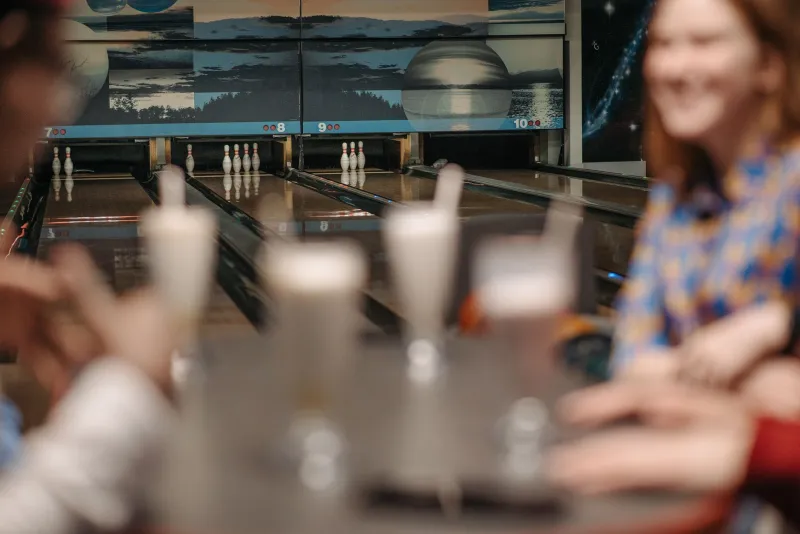
Something funny is happening. After years of optimizing our apartments for hosting — the charcuterie boards, the Spotify playlists queued up just right, the throw pillows arranged like we're staging a real estate listing — people are quietly deciding they'd rather just... go somewhere else.
Not a trendy rooftop bar. Not a reservation-required cocktail lounge. We're talking about the bowling alley with the slightly sticky lanes. The dive bar where the jukebox still takes dollar bills. The coffee shop where the Wi-Fi password is written on a chalkboard and you've been coming every Saturday for two years without ever learning the barista's last name.
These are third places — a term coined by sociologist Ray Oldenburg back in the '80s to describe the social environments that exist outside of home (first place) and work (second place). And right now, they are absolutely eating.
Why Your Living Room Is Actually Kind of Stressful
Here's the thing nobody wants to say out loud: hosting is exhausting. Not just logistically, but psychologically. When you invite people into your home, you're also inviting them into a curated version of yourself. Every object in the room is a prop. The books on your shelf, the candles you lit, the snacks you chose — all of it is quietly broadcasting a personal brand whether you want it to or not.
Social psychologists call this impression management, and while everyone does it to some degree, doing it in your own home turns the dial up to eleven. You're the host, the entertainer, the set designer, and the subject of quiet judgment all at once. That's a lot of hats.
Third places strip most of that away. When you meet your crew at a bowling alley, nobody's evaluating your taste in art. The environment isn't yours — it belongs to everyone and no one. That shared neutrality is genuinely liberating in a way that's hard to put into words until you feel it.
The Built-In Activity Effect
There's another layer here that goes beyond just aesthetics. Venues with built-in activities — bowling, pool tables, pinball machines, the ritual of ordering and customizing a coffee drink — do something clever to group dynamics: they give people something to do besides talk.
This might sound counterintuitive. Aren't you there to hang out and connect? Sure. But pure, unstructured conversation is actually a high-wire act for a lot of people. There's pressure to be interesting, to keep things moving, to not let the silence stretch too long. An activity creates what researchers call a parallel engagement — you're doing something side by side, which paradoxically makes the conversation that flows around it feel more natural and less performed.
Think about it: some of the best talks you've ever had probably happened while you were driving somewhere, or shooting hoops, or waiting for your frame at the bowling alley. The activity holds the space so the conversation doesn't have to hold itself up.
Dive bars get this almost by accident. The jukebox argument — fighting over whether to play classic rock or something from this decade — is a social lubricant that no curated playlist can replicate, because it's live. It's happening in real time. It creates micro-moments of conflict, laughter, and negotiation that actually bond people faster than background music ever could.
The Anti-Performance Zone
Gen Z in particular seems to be leading a quiet revolt against what you could call performance socializing — the kind of hanging out that's really just content creation in disguise. The Instagram-ready rooftop, the aesthetic brunch spot, the house party where half the guests are filming Stories instead of actually being there.
Third places are, almost by definition, bad content. The lighting in a dive bar is terrible. The bowling alley doesn't photograph well. The coffee shop is just a coffee shop. And increasingly, that's the point.
There's a growing appetite — especially among younger crowds who grew up chronically online — for experiences that exist purely for the people in them, not for an audience. Spaces that are a little rough around the edges feel more real, more honest, less like a performance and more like an actual life being lived.
What These Spaces Actually Offer That Clubs Don't
It's worth noting that the third-place revival isn't really competing with clubs or high-end bars. Those serve a different function — spectacle, energy, the thrill of a big night out. Third places are filling a completely different social niche: the low-stakes, mid-week hang. The "I don't want to make a whole thing of it" energy.
A bowling alley on a Tuesday night with four friends and a shared pitcher of beer is one of the most genuinely fun social formats available to American adults, and it costs maybe thirty bucks a person. A dive bar where you know the regulars by face if not by name offers a sense of community that most neighborhoods have largely lost. A coffee shop where you set up camp for two hours and the conversation wanders wherever it wants — that's a luxury that money can't really buy, but a good third place provides for the price of a latte.
Low financial pressure also matters more than people admit. When the venue is affordable, the social dynamic loosens up. Nobody's doing mental math about whether the night is "worth it." You're just there.
The Comeback Nobody Predicted
For a while, it genuinely seemed like the home was going to win. Streaming services, delivery apps, home bars stocked with craft spirits — every cultural trend was pointing toward staying in as the sophisticated, grown-up choice. Going out started to feel almost quaint.
But humans are deeply weird about belonging, and belonging requires a place. Not a screen, not a group chat, not a beautifully appointed living room that still belongs to just one person. A real, physical, shared space where different kinds of people rub up against each other and something unscripted happens.
The bowling alley doesn't care about your aesthetic. The dive bar doesn't care about your follower count. The coffee shop just wants to know if you're getting the same thing as last time.
And honestly? That might be exactly what we needed all along.