Somewhere Between Home and the Bar: How Coffee Shops and Bookstores Became America's Favorite New Hangout
There's a particular kind of afternoon that's becoming more and more common across American cities. Two friends slide into mismatched chairs at a neighborhood coffee shop, laptops half-open, drinks in hand, no real agenda. Nobody's hosting. Nobody's paying a cover. Nobody has to leave when the vibe dies — because the vibe doesn't really die here. It just... settles.
This is the third place in action, and if you haven't heard that term lately, you're about to hear it everywhere.
What Even Is a Third Place?
Sociologist Ray Oldenburg coined the phrase back in the '80s to describe any social environment that isn't home (your first place) or work (your second place). Think barbershops, town squares, diners — the kinds of spots where people gathered not because they had to, but because they wanted to be around other humans without any real pressure attached.
For a while, bars kind of owned this lane. Then the pandemic reshuffled everything. Home became the default, bars felt overstimulating when they reopened, and a lot of people — especially younger ones — realized they'd never really had a third place to begin with.
Now they're building one, one oat milk latte at a time.
The Low-Commitment Zone Is Having a Moment
Here's what makes coffee shops and bookstores so magnetic right now: they're built-in permission slips. You don't have to talk to anyone. You don't have to buy rounds. You don't have to perform. You can show up solo, park yourself near a window, and just exist in the same space as other humans — which, it turns out, is something a lot of us have been deeply craving.
Psychologists call this "ambient sociality" — the low-grade comfort of being around people without direct social obligation. It scratches the loneliness itch without requiring the full social performance that a house party or a loud bar demands. For a generation that grew up online and graduated into a world of Zoom fatigue and social anxiety spikes, this is practically therapeutic.
And when you do want to connect? The environment makes it easy. There's always something to talk about — the book display, the playlist, the weird latte art. The space does half the conversational heavy lifting.
Indie Spaces Are Leaning All the Way In
Smart business owners have clocked this shift and are running with it. Across the country, coffee shops and bookstores are quietly evolving from transactional spaces into full-on community anchors.
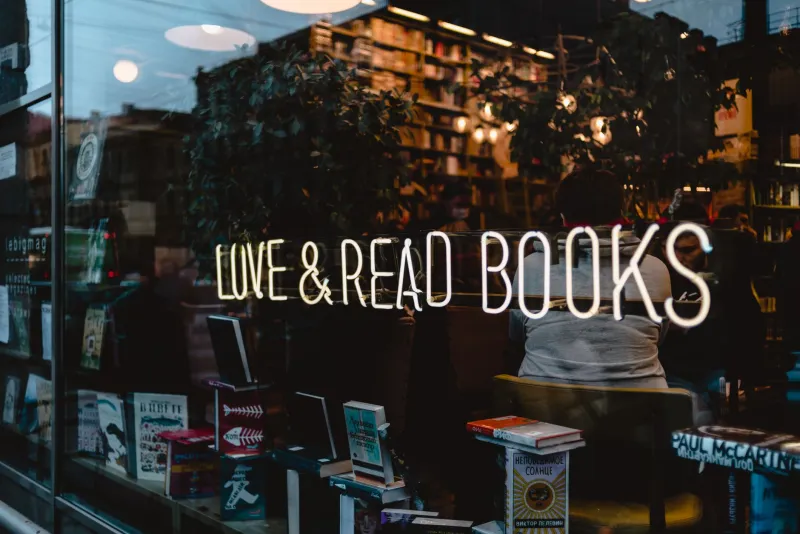
Take the model popping up in cities like Austin, Portland, Nashville, and Brooklyn: hybrid spaces that blend a curated book selection with a full espresso bar, intentional seating arrangements, and a rotating calendar of low-key events — think author readings, vinyl listening sessions, or casual sketch nights. The point isn't just to sell you something. It's to give you a reason to stay.
Owners of these kinds of spots will tell you the same thing: people aren't just coming in for the coffee. They're coming in for the feeling. The warm lighting, the ambient noise that's just loud enough to mask awkward silences, the sense that you're part of something without being required to be on.
One Brooklyn café owner described her regulars as people who "want community without the commitment." She started hosting monthly "slow mornings" — no phones, soft music, board games available — and the waitlist filled up in 48 hours. That's not a coffee trend. That's a cultural shift.
Gen Z Is Rewriting the Social Rulebook
Millennials started the third-place revival out of a kind of nostalgic longing — the coffee shop as a callback to a slower, more analog era. Gen Z is taking it further and making it a full lifestyle statement.
For a generation that grew up with social media as a constant performance space, the appeal of a no-pressure hangout environment is almost radical. You're not curating content here. You're just hanging out. The bookstore isn't a backdrop for a photo op — it's the actual destination.
There's also a financial reality at play. Bar tabs add up fast, and home entertaining requires space, supplies, and hosting energy that not everyone has (or wants to spend). A coffee shop hangout costs you the price of a drink and gives you hours of ambient social time. The math is just different.
And these spaces are increasingly designed with that in mind — longer communal tables, power outlets everywhere, a "stay as long as you want" energy that feels like the opposite of a restaurant trying to flip tables.
The Built-In Activity Effect
One underrated reason these spaces work so well socially? There's always something to do, even when you're doing nothing.
Browsing shelves, flipping through a magazine, watching the barista work — these micro-activities take the pressure off conversation. You're never just sitting there staring at each other waiting for something to happen. The space fills the gaps naturally.
This is a huge deal for people who find unstructured social time genuinely stressful. A coffee shop hang has a built-in rhythm. You arrive, you order, you settle in, something catches your eye, you mention it, a conversation unfolds. It's social scaffolding — and it works.
Compare that to a house party where you're expected to bring energy, or a bar where the noise makes real conversation nearly impossible. The third place wins on ease every single time.
So What Does This Mean for How We Hang?
The third place revival isn't a rejection of bars or home entertaining — it's an addition to the social menu. It fills a gap that a lot of us didn't even realize was there: the space between isolation and full-on social performance.
For anyone who's been feeling like their social life is either all-or-nothing, this might be the permission slip you needed. You don't have to host a dinner party. You don't have to hit the club. You can just... show up somewhere cozy, order something warm, and let the vibe take it from there.
The living room isn't going anywhere. But for a lot of people, the real magic is happening two blocks away — in the corner booth of a coffee shop that smells like espresso and old paperbacks, where nobody expects anything from you except to just be there.
Honestly? That sounds like exactly the kind of night we're here for.