Roll the Dice, Save the Night: How Board Games Became the Ultimate Social Hack
Picture this: eight people in a living room, drinks in hand, music at a decent volume, and absolutely nobody talking to anyone they didn't already know walking in. That low-grade social stiffness — the shuffle, the phone check, the polite laugh at nothing — is basically the unofficial tax of modern socializing.
Now picture the same room, same people, forty-five minutes into a round of Codenames or a chaotic game of Exploding Kittens. Someone's yelling. Someone else is cackling at the table. Two people who met an hour ago are now in a heated alliance. The vibe has completely flipped.
That's the board game effect. And it's not an accident.
Why Your Brain Actually Needs Something to Do
Here's the thing most people don't realize about hanging out: unstructured social time is genuinely hard for a lot of us. We're wired for stimulation, and when a gathering doesn't have a built-in rhythm or focus, the brain starts filling the gap with anxiety — Am I being interesting enough? Should I refill my drink just to have somewhere to walk?
Social psychologists have been studying this for years. Dr. Stuart Brown, a psychiatrist who's spent decades researching play behavior, has argued that play isn't frivolous — it's one of the most direct pathways humans have to genuine connection. When people engage in shared, low-stakes challenge together, the social walls come down faster than almost any other activity.
A game gives everyone a role. It gives the quiet person in the corner a reason to speak up. It gives the nervous new addition to the friend group a script. Nobody has to perform — they just have to play.
The Game Café Boom Is Not a Coincidence
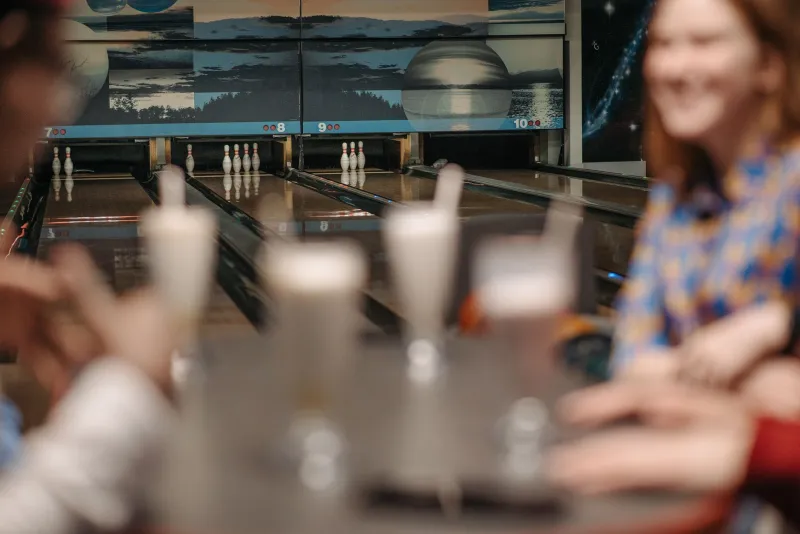
If you've noticed more game cafés popping up in your city over the last few years, that's not random. Places like Snakes & Lattes (which expanded from Toronto into the US market) and dozens of independent spots across cities like Austin, Chicago, and Portland have built entire business models around this exact social dynamic.
The pitch is simple: come in, pay a small cover, pick from a library of hundreds of games, and let the structure do the heavy lifting. No need to plan a whole elaborate evening. No pressure to be endlessly witty. The game handles the agenda.
Owners of these spots consistently report that game cafés attract a wildly diverse crowd — first dates, work teams doing something other than a sad happy hour, old friend groups trying to actually reconnect rather than just sit in the same room staring at their phones. The game is the great equalizer.
Analog in a Digital World — That's the Point
There's something almost rebellious about pulling out a physical card deck or a box full of wooden pieces in 2025. Everything else in our social lives has been flattened into a screen. Texting, scrolling, even watching something together — it's all mediated through glass.
Board games are tactile. You're touching things, moving things, looking at other people's faces to read their bluffs. That face-to-face, hands-on quality isn't just nostalgic — it's neurologically different. Eye contact, laughter, physical presence — these are the ingredients that actually build the kind of trust and warmth that a group chat simply cannot replicate.
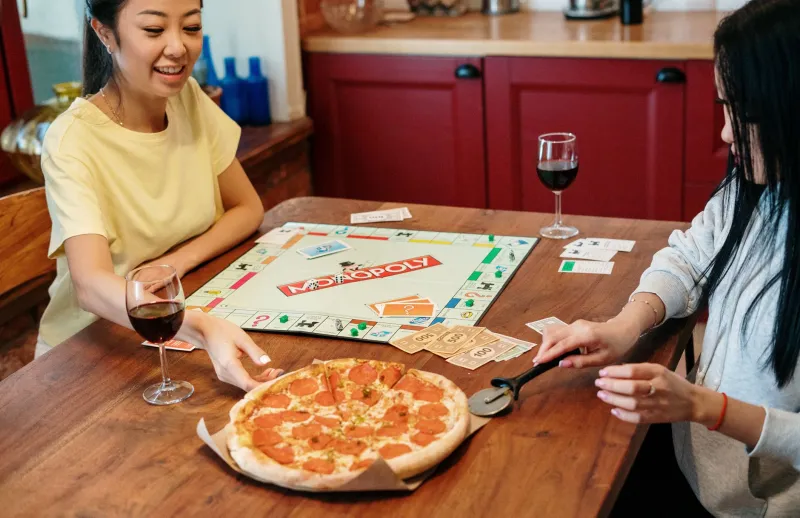
Game designers have caught onto this. Modern board game design has exploded in sophistication over the last decade. The "golden age" of board games — a phrase hobby game enthusiasts use without irony — has produced titles that are wildly more interesting than the Monopoly-and-Sorry era most of us grew up with. Games like Wingspan, Pandemic, Ticket to Ride, and Coup are built with real thought given to player interaction, pacing, and the emotional arc of a session.
They're engineered, often intentionally, to create moments.
The Natural Conversation Break Is an Underrated Gift
One of the sneaky superpowers of game night is what happens between turns. There's a rhythm to it — moments of focus, then moments of release. Someone takes their move, and suddenly everyone's laughing, arguing, or explaining why that was the worst strategic decision in recorded history.
Those gaps are where the real conversation happens. Stories get told. Inside jokes get born. The game provides the scaffolding, and actual human connection fills in the rest.
This is especially valuable for friend groups that are in different life stages — some people coupled up, some not, some with kids, some not. A game gives everyone a shared present-tense experience to inhabit together, which is increasingly rare in adult social life.
What to Actually Pull Out Depending on Your Crowd
Not every game works for every group, and picking the wrong one is a real risk. Here's a loose cheat sheet:
For big, rowdy groups (6–10 people): Wavelength, Jackbox Party Pack (technically digital, but played together on a TV), Codenames, or Werewolf/Mafia. High chaos, low rules-reading required.
For a chill night with 3–5 close friends: Ticket to Ride, Coup, Sushi Go, or Catan if everyone's got the patience for it. More strategy, more table talk.
For a first date or new group energy: Hive Mind, Sushi Go, or Exploding Kittens. Fast, funny, and nobody needs a rulebook degree to enjoy themselves.
For the crew that thinks they're too cool for games: Secret Hitler (controversial name, genuinely great social deduction game), One Night Ultimate Werewolf, or literally any trivia format. Competition and mild chaos tend to convert skeptics fast.
Hosting the Game Night That Actually Slaps
A few things separate a game night people talk about the next day from one they politely forget:
Keep the rules explanation short. Nothing kills momentum like a fifteen-minute tutorial. Pick games that can be learned in under five minutes, or at least break it into rounds — learn as you play.
Have snacks that don't require two hands. The snack spread matters. Finger foods, dips, stuff people can grab mid-turn. Full meals slow everything down.
Don't force a single game all night. Read the room. If energy is dropping, switch it up. Game nights work best as a rotation, not a marathon commitment to one title.
Keep the stakes low. The second it starts feeling like someone's genuinely upset about losing, the vibe cracks. Keep it light. Mock trash talk only.
The Bigger Picture
In a social landscape where everyone's overstimulated, under-connected, and quietly exhausted by the performance of going out, game night offers something kind of radical: a reason to be in the same room that doesn't require anyone to be "on" the whole time.
You don't have to be charming every second. You just have to play your card, make your move, and let the laughs happen naturally.
That's not a step backward from modern socializing. That might actually be the most sophisticated upgrade your hang has seen in years.